
Initial enquiry
You explain what is locked and the context in which it was found or inherited. A photograph can form part of the preliminary assessment where available.
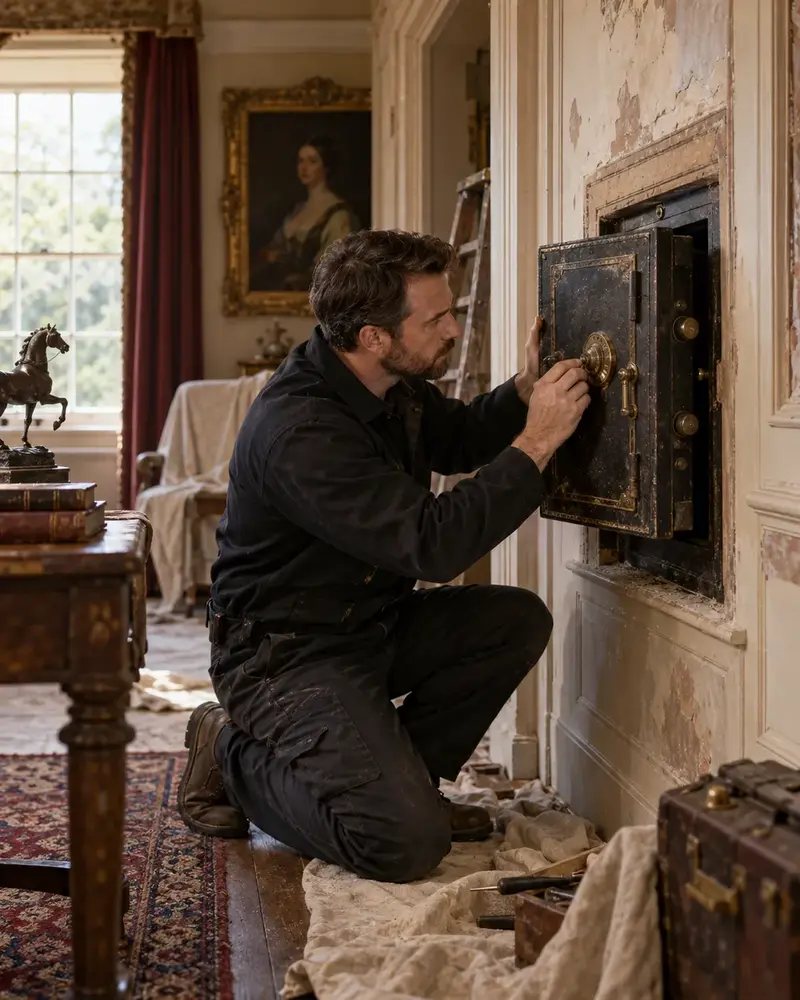
Brassward presents a careful opening service for antique locks, old safes, chests and closed storage. A specialist inspects the lock, considers whether it can be opened with minimal impact, confirms the client’s right to the property and carries out the work only after that assessment.
The service is intended for older locked objects where access and preservation matter together. Select an object below to see how the assessment-led approach is framed for that type of closure.
For locked safes discovered in older properties, the first priority is understanding the mechanism and the surrounding structure before any opening work begins. The specialist assesses whether careful access is possible and proceeds only after the client’s right to the property has been confirmed.
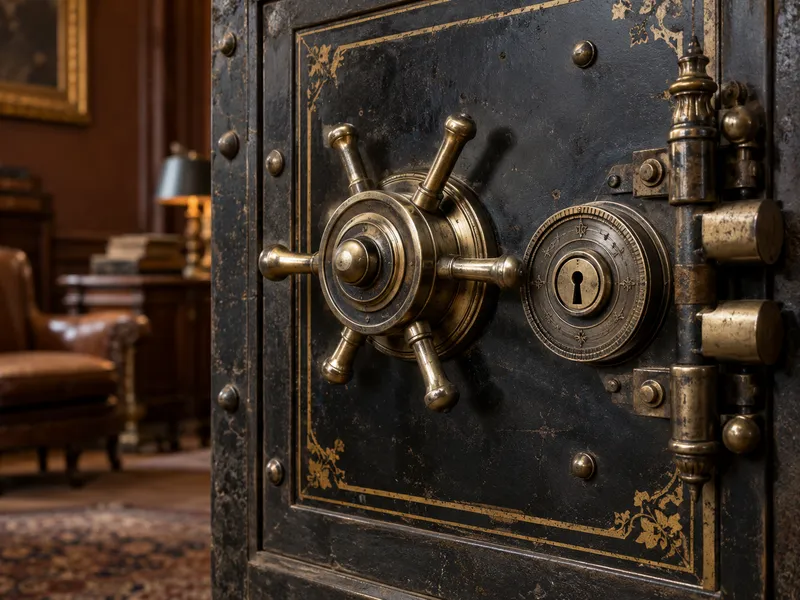
A clear photograph can help identify what kind of object is involved and whether a specialist visit is the appropriate next step. It is an initial assessment only: the condition and mechanism still need to be considered before opening work is confirmed.
Tell us whether the item is an old safe, antique lock, chest or closed storage, where it is located within the property and what you can see of the lock or mechanism. If you already have a photograph for preliminary assessment, mention that in the enquiry.
A photograph can help with an initial view of the object, but it does not replace confirmation of the client’s right to the property. That check remains part of the process before work is carried out.
The process is deliberately sequential. Each stage informs the next, so the specialist can judge what is practical before the opening is attempted.
You explain what is locked and the context in which it was found or inherited. A photograph can form part of the preliminary assessment where available.
The specialist examines the old lock, safe, chest or storage and assesses whether careful opening is possible in the circumstances.
Before opening work proceeds, the client’s right to the property is confirmed. This is a condition of the service, not an optional formality.
Once the assessment and right-to-property check are complete, the specialist carries out the work using the approach judged appropriate for the mechanism.
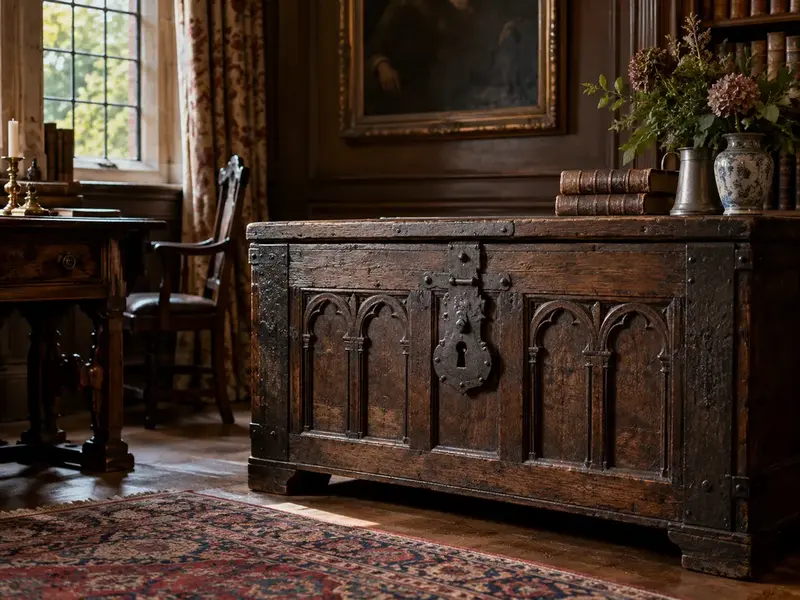
The service is provided only after the client’s right to the property has been confirmed. That applies whether the locked object is part of a house renovation, an inherited chest, an antique cabinet or an old safe that has not been opened for years.
If the specialist cannot be satisfied that the client has the right to the property, the opening work does not proceed.
Older mechanisms vary in condition and construction. The specialist first considers what can reasonably be preserved and what limitations the particular lock, safe or chest may present.
Where circumstances allow, the opening approach is selected with the old lock, hardware and surrounding material in mind rather than treating them as disposable parts.
Age, wear, prior damage or the construction of the mechanism can affect what is possible. The assessment is intended to identify those limitations before work is confirmed.
Documents, photographs and personal belongings inside an old safe or chest can carry more significance than the container itself. The service is framed around gaining access while treating what is inside with care.
During work on an old house, the owners uncover a locked safe built into the wall. There is no useful key and no clear indication of what the mechanism has been through over the years. Instead of forcing it, the specialist first inspects the lock, assesses the possibility of a careful opening and confirms the owners’ right to the property.
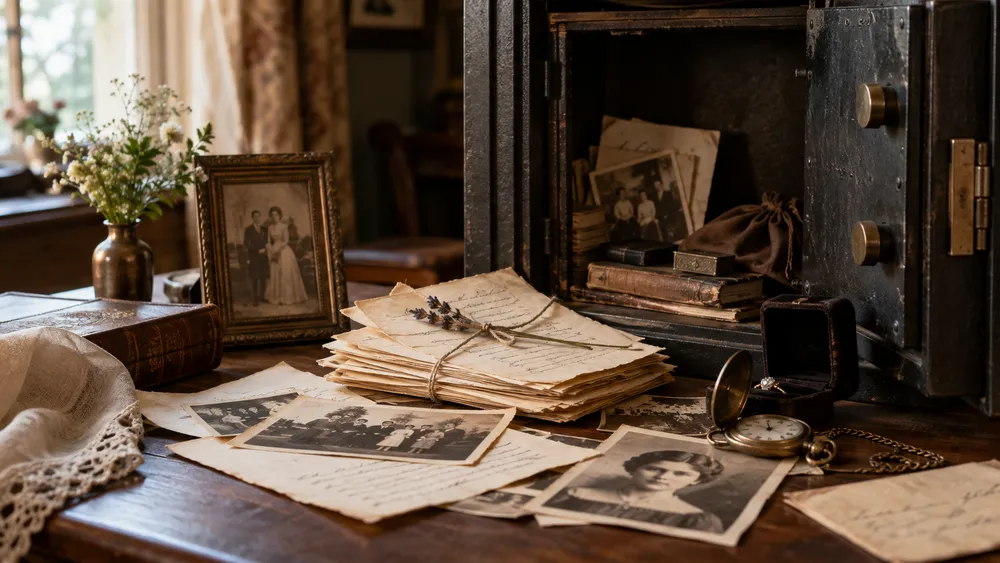
After the opening is completed, the reason for that patience becomes visible. Inside are old documents, photographs and personal belongings from previous owners — items that turn a closed metal box into part of the history of the house.
The value of the service is in the sequence: understand the object, confirm the right to it, judge what is possible and only then carry out the opening.
The lock or mechanism is examined before the opening approach is confirmed.
The service does not proceed without confirmation of the client’s right to the property.
The work is approached with preservation of fittings and surrounding material in mind where circumstances permit.
Opening can reveal documents, photographs or personal effects, so the object is treated as more than a mechanism alone.
Because old locks, safes, chests and storage mechanisms differ, the service is not presented here as a single fixed price. The order of calculation begins with the information you provide, followed by the specialist’s assessment and, where required, an on-site inspection before work is confirmed.
The answers below reflect the service process described on this site and avoid assumptions about a specific lock before it has been assessed.
A photograph can support a preliminary assessment and help establish what type of object or visible mechanism is involved. It does not replace inspection where that is needed, and it does not replace confirmation of the client’s right to the property.
No. The service described here covers antique locks, old safes, chests and closed storage, including locked objects found in older properties or inherited with their contents inaccessible.
The service is aimed at careful opening and preservation where circumstances allow, but older mechanisms can have wear, previous damage or construction limitations. The specialist assesses those limits before work is confirmed rather than promising an outcome that has not yet been inspected.
Because opening a locked safe, chest, cabinet or other storage gives access to property and potentially to private contents. Confirmation of the client’s right to the property is therefore part of the service process before opening work proceeds.
The site does not present a generic fixed price because the object and mechanism first need to be assessed. The order is preliminary information, specialist assessment and confirmation of the work after the relevant checks are complete.
The purpose of the assessment is to establish what is possible before intervention. If the specialist cannot confirm an appropriate opening approach in the circumstances, the work is not represented as something that can simply be forced through regardless.
Use the form to describe the safe, lock, chest or closed storage and whether you have a photograph available for preliminary assessment. The enquiry is the starting point for deciding whether a specialist visit is appropriate.